
Our seeds
Camelina - a seed with multiple uses
A promising oilseed, rich in omega-3, selected in France by Panam for over 10 years.

Botany & biology
An ancient plant with remarkable agronomic qualities
Camelina (Camelina sativa), from the Brassicaceae family, originates from Northern Europe and Central Asia. Little known today, it has been cultivated since the Bronze Age, when its oil was used for food, lighting and its medicinal properties. Its straw was also used for roofing and as fuel. Camelina oil is one of the oldest edible oils. It was gradually abandoned at the beginning of the 20th century in favour of flax, which was also used in textile production.
Growing 40 to 120 cm tall, it has oblong lanceolate leaves, an erect stem, simple or branched. Its flowers are yellow, only a few millimetres in size, and produce fruits containing up to twenty seeds of 1.5 to 2 mm. It is mainly self-pollinating and has a taproot that penetrates deeply into the soil.
An annual plant that matures in 85 to 100 days, it is well adapted to temperate climates. It can germinate at low temperatures and young plants are tolerant of both frost and drought. Sowing can take place from March to June, but mid-April to mid-June is preferable.
It requires few inputs, resists large temperature variations and water shortages. Its frugality allows it to grow on relatively poor soils. Like other crops in the mustard family, it can be fertilised with nitrogen, phosphorus or sulphur, the latter having the particular property of increasing oil content. It can be grown alone or in association with lentil, barley, wheat and protein peas.
Agronomy
Camelina growing potential
Easy to produce, it attracts few pests and parasites. It has allelopathic properties, meaning it can inhibit the growth of neighbouring plants that would compete with it. Its strong ground cover capacity significantly limits weed development, considerably reducing herbicide use.
Its hardiness allows it to withstand both temperature variations and drought, making it well suited to the French climate. It is increasingly present in organic farms, particularly in cereal-based systems. However, some sensitivity to white rust and crucifers has been noted.
In pure stand, its yield ranges between 10 and 15 quintals per hectare. With a short development cycle, it occupies the land for a relatively short time, allowing farmers to sow another species after it. In association, it acts as a support plant and provides ground cover in place of weeds.
Camelina therefore offers real agronomic benefits and perfectly meets environmental expectations. It is a plant that requires few inputs and is easily grown in France. Its only drawback remains its low profile and still underdeveloped market outlets.
Nutritional profile
Camelina in our daily lives
Camelina consists of 20% fibre and 20% protein including 10 essential amino acids. It is valued primarily for its oil, with a content ranging from 28 to 42%. Ranked third among the seeds richest in omega-3 after chia and flax, it helps rebalance the excessive omega-6 intake found in many oilseeds.
Omega-3
38%
in camelina oil
Omega-9
30%
in camelina oil
Omega-6
19%
in camelina oil
Oil content
28-42%
of the seed
Protein
20%
including 10 essential amino acids
Its fluid, golden-yellow oil with a flavour reminiscent of asparagus tips contains very high levels of antioxidants and vitamin E. It is recognised for rebalancing the omega-6/omega-3 ratio, preventing neurodegenerative diseases, thinning the blood and reducing cardiovascular risks.
Markets & applications
A seed with multiple uses
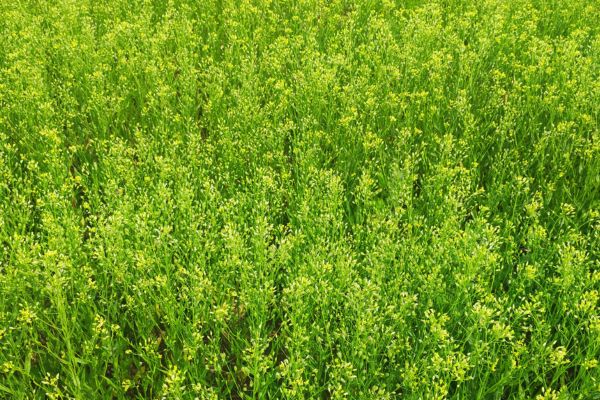
Energy
Aeronautical biodiesel
In a context of dwindling fossil resources, camelina is emerging as a high-potential aeronautical biofuel solution. Its ease of cultivation and resistance to pests give it a clear advantage over other oilseeds.
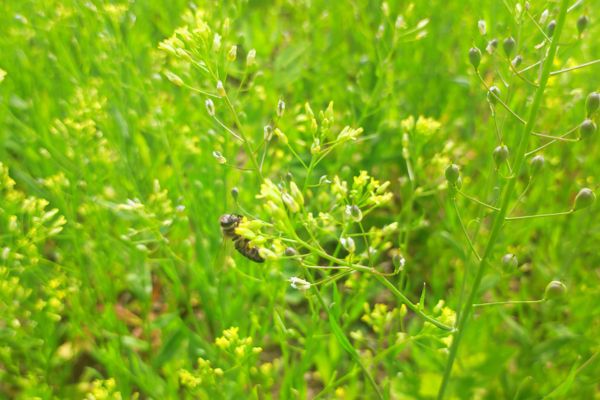
Nutrition
Human nutrition
Ranked 3rd richest seed in omega-3 after chia and flax, camelina addresses omega-3 deficiencies now recognised as a major public health issue. Increasingly recommended on health blogs and in specialist stores.
Its main benefits: rebalancing the omega-6/omega-3 ratio, preventing neurodegenerative diseases, preventing colorectal and prostate cancers, thinning the blood, limiting arterial build-up, preventing cardiovascular risks and regulating intestinal transit.
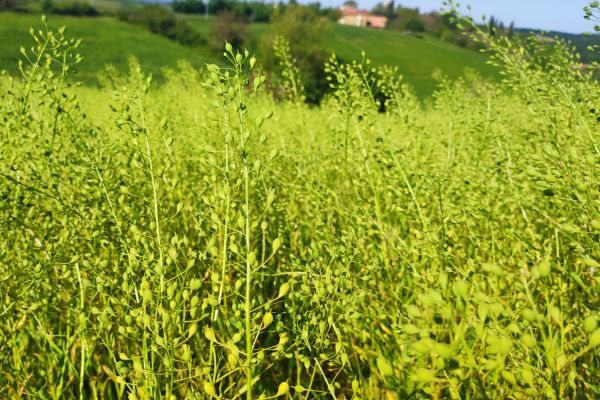
Beauty
Cosmetology
Anti-inflammatory and soothing properties ideal for dry or irritated skin. Camelina is also used in anti-ageing skincare to reduce wrinkles. A growing market driven by natural cosmetics enthusiasts.
Our programme
Panam France breeding programme - 10 years of research
Panam France, based in Villemur-sur-Tarn, has been running a camelina breeding programme for over 10 years. The main breeding focus is to optimise oil content, particularly ALA (alpha-linolenic acid), EPA (eicosapentaenoic acid) and DHA (docosahexaenoic acid), while minimising erucic acid and glucosinolate content.
Early maturity is a key breeding objective to enable two crops per year and keep the soil covered year-round. The two varieties CAMARES and MELINA have been protected and are part of a development programme within the company AGROFÜN.
Protected variety
Camares
Variety selected by Panam France, optimised for its high ALA, EPA and DHA content. Adapted to the French climate and arable farming systems.
Protected variety
Melina
Early variety selected to enable two crops per year. Optimised oil content, low erucic acid and glucosinolate levels.
The supply chain
French camelina - an integrated and rewarding supply chain
Despite its exceptional nutritional value, camelina remains the poor relation of oilseeds in France. It naturally takes its place alongside chia in the omega-3 dedicated supply chain, driven by AGROFÜN.
This unique supply chain integrates all partners: growers, collectors, processing industries, food manufacturers and distributors. Prices are defined in advance and all production is contracted. Farmers benefit from a fair and stable price over the medium to long term, with seeds provided free of charge.
The Supply Chain Foundation, backed by the Fondation de France, funds research with the CHU de Nantes, INRA Paris and Toulouse on the impact of plant omega-3 consumption on pregnant women and foetuses.
French Camelina Supply Chain
Find all information about the French camelina supply chain on the Agrofün website.
Need variety advice?
Our team is available Monday to Friday, 8:30 am to 5:30 pm - 05 34 27 45 96